
Homeowners Insurance and Ice Dams in Wisconsin: What Is Covered
Updated
Get a free quote
We reply with a price. Nothing is booked until you say yes.
Rather talk? Call (608) 352-4700 or text us.
What to expect
Part of Ice Dam Removal.
Why ice dam claims come in Janesville's thaws
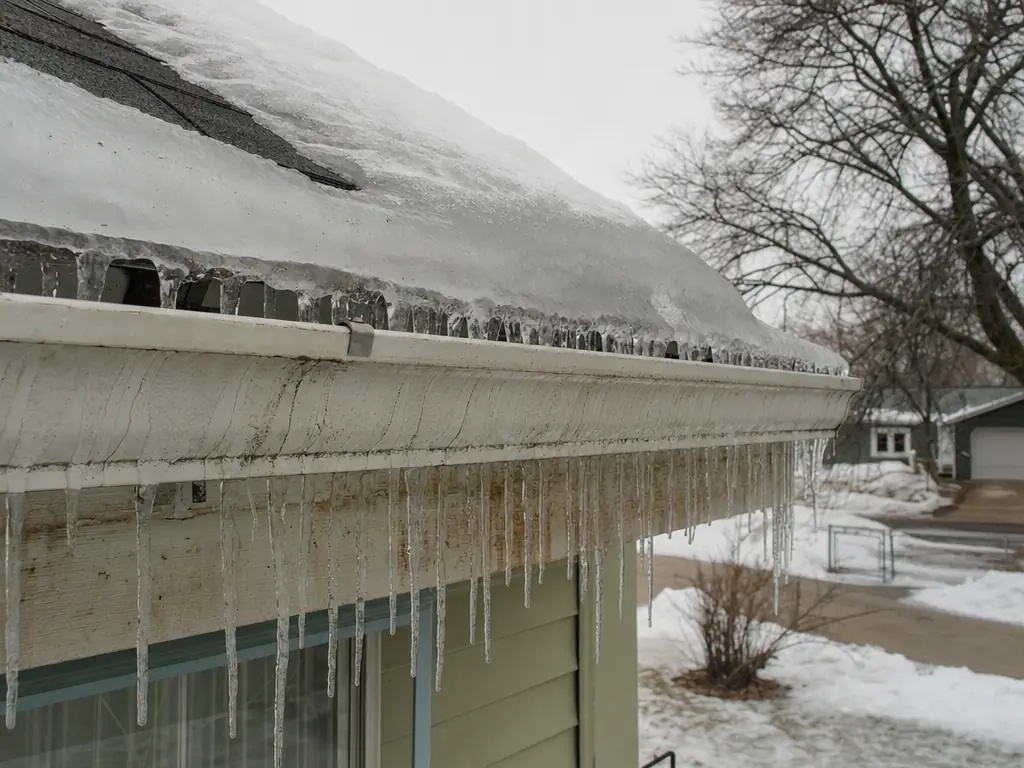
Janesville gets 28.6 inches of its 36.6 inches average snowfall in December, January and February. The damage usually shows up on a mild day after a cold, snowy stretch: the attic warms the roof, snow melts, the water freezes again at the cold overhang, and the next round of meltwater ponds behind that ridge of ice and works under the shingles. Wisconsin's insurance office describes it the same way: water builds up behind the ice dam and may seep into the home, damaging walls, flooring and cabinets.
What Wisconsin's insurance office says about ice dams
The Office of the Commissioner of Insurance (OCI) is the state agency that regulates insurers in Wisconsin, and its winter advice has repeated the same point for years. Water coming from the top down is generally covered by a standard homeowners policy, and water coming from the bottom up is not. Its own examples: burst fire sprinklers in the ceiling, or seepage behind drywall from an ice dam in the gutter, would be covered. Seepage through the foundation and overland flow would not, and need a separate flood policy.
OCI adds a caution that matters for older roofs. A homeowners policy may cover ice damage, but a roof that was already in poor condition before the weather event may affect that coverage, so check the policy and ask your agent about endorsements or riders.
What a Wisconsin homeowners policy usually covers in winter
Policies differ by company and by form, and OCI says so. Its homeowners guide describes the forms sold in Wisconsin. The Broad Form (HO-2) covers fire, wind, hail, theft and similar perils, and also building collapse; freezing or accidental discharge of water from plumbing, heating or air conditioning systems and appliances; falling objects; and the weight of ice, snow or sleet. Other forms, such as the Special Form, are described in the same guide, which also lists the common exclusions: flood, surface water and overflow of a body of water; water from sewers or drains backing up; and damage from neglect, among others.
| Winter water problem | Standard homeowners policy | Where OCI says it |
|---|---|---|
| Ice dam water seeping behind drywall (top down) | Generally covered | Flood damage FAQ, winter tips |
| Burst pipe from freezing inside the house | Listed as covered in the Broad Form (HO-2) | Homeowners guide |
| Weight of ice, snow or sleet; building collapse | Listed as covered in the Broad Form (HO-2) | Homeowners guide |
| Meltwater through the foundation, overland flow | Not covered; needs flood insurance | Flood damage FAQ |
| Sewer or drain backup, sump pump overflow | Not covered without an endorsement | Homeowners FAQ, flood damage FAQ |
| Damage from neglect | Not covered | Homeowners guide |
The guide also suggests asking your agent outright, "Is ice damage covered?" Ask it before winter, and ask whether removing the ice itself is treated differently from repairing the damage it caused, since policies are not all written the same way.
Sewer backup and sump pumps after a thaw
A fast melt sends a lot of water at the basement at once. OCI says sewer backup is typically not covered by a homeowners policy, though most companies sell sewer backup coverage as an endorsement, and that neither homeowners nor flood insurance covers damage from sewer backup or sump pump overflow on its own. If your basement takes water every spring, that endorsement is the line to look for.
How to document and file an ice dam claim
These are the steps the Wisconsin insurance commissioner lays out for a property claim:
- Notify your agent or insurance company as soon as possible.
- Take photos or video of the damage, inside and out, including the ice on the roof edge if you can do it safely from the ground.
- Make a detailed list of damaged property, and keep swatches of damaged carpet, curtains or upholstery.
- Make temporary repairs to stop more damage, keep the receipts, and include them in the claim. Permanent repairs should wait until the adjuster has looked at the damage.
- Do not throw out damaged property without the adjuster's agreement; if you must, photograph it first.
- Expect a proof of loss form. A home inventory speeds that up. OCI publishes one, and the NAIC Home Inventory app does the same job.
If you think the settlement is low, OCI says to contact the company and give it information that supports what you believe the claim is worth.
Opening a channel through the dam so the water drains is a reasonable temporary step to stop further damage. We do that with steam, which melts through the ice without cutting into the shingles. It runs $650 to $2,400. The job is on ice dam removal and every price is on the cost page. Keep the invoice and the before and after photos for the claim.
Neglect, upkeep and the condition of the roof
Because neglect is excluded and a roof in poor shape can affect coverage, the record of keeping up the house helps. OCI's own winter advice is to pull snow off the lower roof with a roof rake from the ground and not to climb up or chip at the ice. The long-term fix is in how to prevent ice dams. The weight question, including when a snow load gets dangerous, is in how much snow a roof can hold. Raking or clearing the roof as a service is on roof snow removal.
For renters, the building is the landlord's policy and the belongings are the tenant's; who handles snow at a rental is in landlord or tenant. Water and ice on walkways raise a different insurance question, liability for falls, which is in slip and fall on ice in Wisconsin. And when the thaw comes, keep the gas meter and furnace vents clear of falling roof snow (what to clear besides the driveway).
More on snow removal in Janesville: what we do, what it costs and how to get a quote.
Sources (7)
- NOAA NCEI, U.S. Climate Normals 1991-2020, station Afton - Janesville WWTP (USC00470045)
- Wisconsin Office of the Commissioner of Insurance, winter weather tips press release
- Wisconsin Office of the Commissioner of Insurance, FAQ on flood damage (PI-240)
- Wisconsin Office of the Commissioner of Insurance, consumer's guide to homeowners insurance (PI-015)
- Wisconsin Office of the Commissioner of Insurance, FAQ on homeowner's insurance (PI-232)
- Wisconsin Office of the Commissioner of Insurance, consumer's guide to settling property insurance claims (PI-084)
- Angi, ice dam removal cost
Want a price for your own place?
Call, text, or send the form. You get a written price back before anything is scheduled.
Quick answers
Does homeowners insurance cover ice dam damage in Wisconsin?
Generally the interior water damage is covered: water coming from the top down, such as ice dam seepage behind drywall, is covered by a standard policy. A roof already in poor condition before the storm can affect the claim.
Is ice dam removal covered by insurance?
Policies differ, so ask your agent, ideally before the work. Keep the invoice and photos either way: Wisconsin's insurance office says receipts for temporary repairs that protect the property belong in the claim. See ice dam removal.
Does homeowners insurance cover a roof collapse from snow?
The Broad Form (HO-2) policy described in OCI's homeowners guide lists building collapse and the weight of ice, snow or sleet among its covered perils. Check which form you have and its exclusions.
What winter water damage is not covered in Wisconsin?
Flood, surface water and overflow of a body of water are usually excluded, and so is water from sewers or drains backing up, per OCI's homeowners guide. Sewer backup coverage is usually sold as a separate endorsement.
Keep reading
- How to Prevent Ice Dams in Wisconsin: Attic, Vents, Rake
- How Much Snow a Roof Can Hold in Wisconsin (Rock County)
- How Much Snow Janesville, WI Gets (Averages by Month)
- Who Shovels the Sidewalk, Landlord or Tenant (Wisconsin)
- Slip and Fall on Ice in Wisconsin: Who Is Liable
- Clear Snow From Gas Meters, Furnace Vents and Hydrants
- Per Push vs Seasonal Snow Contract: the Janesville Math
Rather not shovel it yourself?
Tell us the address, the driveway and the walks. We reply with a per-push price and a season price before the first visit.