
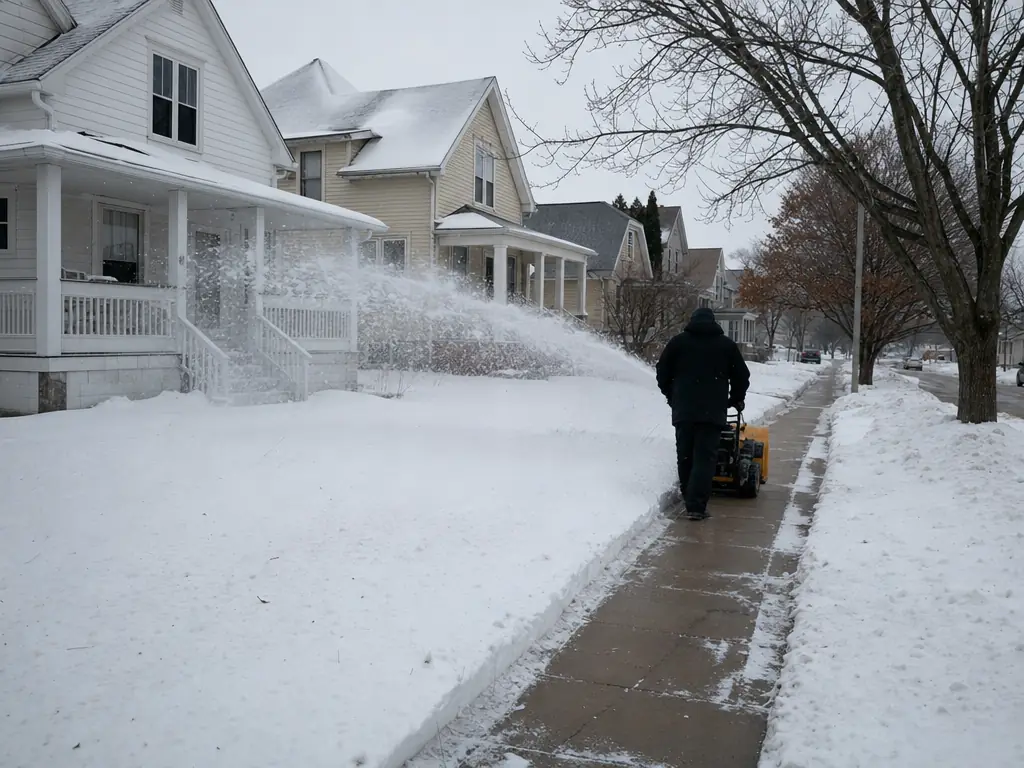
Clear Snow From Gas Meters, Furnace Vents and Hydrants
Updated
Get a free quote
We reply with a price. Nothing is booked until you say yes.
Rather talk? Call (608) 352-4700 or text us.
What to expect
Part of Sidewalk Snow Removal.
The driveway is not the only thing to clear in Janesville
A Janesville storm buries more than the drive. Alliant Energy is the electric and natural gas utility for the city, and its winter safety advice is blunt: snow and ice can damage or block natural gas meters and exhaust vents, especially after a major storm. The City of Janesville adds hydrants and storm sewer inlets to the list. Here is the whole after-the-storm list in one place.
| What to clear | Why | How |
|---|---|---|
| Natural gas meter and regulator | Snow and ice can damage or block the meter and its vent | By hand or with a broom; never kick it or hit it with a shovel |
| Furnace and water heater vents on the side wall | A blocked exhaust can make the appliance shut down or let carbon monoxide build up | Brush the snow off both pipes; check again after drifting |
| Dryer vent | The exhaust needs somewhere to go | Clear the hood so the flap can open |
| Fire hydrant near your house | Firefighters lose time digging for it | Shovel a large area around it, as the Fire Department asks |
| Storm sewer inlet at the curb | Meltwater pools and refreezes in the street and your driveway approach | Break up the packed snow and ice over the grate |
| Car tailpipe | Carbon monoxide can build up inside the car | Check it before you start the engine |
How to clear snow from a gas meter
Alliant Energy's guidance, in the order you would do it:
- Remove snow from the meter and its piping with your hands or a broom. Kicking it or using a shovel can damage it.
- Knock down icicles hanging from the roof or eaves above the meter.
- Stop dripping water or freezing rain from building up on it. The vent can plug when snow and ice melt in the day and refreeze at night.
- Do not pile snow on the meter when you shovel or run the snow blower.
The meter has a regulator with a small vent of its own, which is why ice on top of it matters even when the meter face looks fine. When you shovel the walk along that side of the house, throw the snow the other way. If you smell gas, leave the building and call Alliant from somewhere else at 1-800-ALLIANT (800-255-4268).
Furnace, water heater and dryer vents
A high-efficiency furnace or a power-vented water heater usually exhausts through plastic pipes in a side wall instead of a chimney, low enough that drifts and shoveled snow can cover them. Alliant says chimneys and vents on the roof or side of a building have to stay clear for proper venting and to prevent carbon monoxide from building up or the equipment from malfunctioning. Brush them off after each storm and again after a windy night.
If a vent gets blocked, the appliance can malfunction or stop working. The bigger risk is carbon monoxide. The CDC says that each year more than 400 Americans die from unintentional carbon monoxide poisoning not linked to fires, more than 100,000 visit an emergency department and more than 14,000 are hospitalized. Clear the dryer vent hood too, so the flap can open.
Wisconsin's carbon monoxide detector law
Wisconsin requires the owner of a dwelling to install a working carbon monoxide detector in the basement and on each floor level, except the attic, garage or storage areas, of every unit. The rule does not apply to a home with no attached garage, no fireplace and no fuel-burning appliance. Hard-wired detectors need a battery backup, and for homes whose building permit was issued on or after February 1, 2011, detectors have to be wired in. The occupant maintains the detector, and if a tenant gives written notice that one is not working, the owner has 5 days to fix it. Winter is when that detector earns its keep.
Fire hydrants on your block
The Janesville Fire Department asks every resident to shovel a large area around any nearby hydrant. A hydrant that is visible and clear saves time and lets firefighters start work sooner. The city also notes that hydrants often get covered when plow operators push snow onto the terrace, and suggests a stake or reflector at the hydrant so crews can see it. The water utility flushes each of the city's 2,561 hydrants every year, so the one on your terrace is a working part of the system, not decoration. Fire Department questions go to (608) 755-3050.
The city plow's curb pass is what usually buries it, along with the end of your driveway. The timing of that pass is in how the City of Janesville plows, and what to do with the ridge it leaves is in the windrow guide.
Storm sewer inlets at the curb
The city asks residents to clear packed snow and ice from around storm sewer inlets so meltwater can get into the sewer and out of the street and gutter. It matters most in the freeze and thaw cycles of late winter, when melt refreezes in driveway approaches and on the street. Catch basins are also hard for plow crews to find, so the city suggests marking them too. A clear inlet is the difference between a wet apron and a sheet of ice across the bottom of your drive, which then needs salt (the ice melt guide).
The car in the driveway
The CDC's winter storm message is to clear more than your driveway: check that the tailpipe is clear before you start the car, because a blocked tailpipe lets carbon monoxide build up inside quickly. That goes double for a car that sat at the curb through a curb pass.
Roof lines above the meter and vents
A lot of meter icing starts above it: icicles, a dripping gutter, or an ice dam that sends meltwater down the wall. If your eaves grow ice every winter, the cause is usually heat escaping into the attic, covered in ice dams in Wisconsin, and the weight question is in how much snow a roof can hold.
Putting it on someone else's list
None of this takes long, but it comes right after the shoveling, when people are tired, and some of it is low to the ground and awkward. If you are hiring out the sidewalk and walkway clearing, ask whether the crew will brush off the meter and vents and open the hydrant while they are there, and get it in writing (contract checklist). For older neighbors who cannot get to it, see snow removal help for seniors. Your own walk is still on the city's 12-hour clock (sidewalk rules).
More on snow removal in Janesville: what we do, what it costs and how to get a quote.
Sources (7)
- Alliant Energy, communities served
- Alliant Energy, seven tips to stay warm and stay safe
- City of Janesville, helpful winter reminders
- City of Janesville, utilities and telecommunications
- Wisconsin Statutes, sec. 101.647, carbon monoxide detectors
- CDC, carbon monoxide poisoning basics
- CDC, clear snow from tailpipes
Want a price for your own place?
Call, text, or send the form. You get a written price back before anything is scheduled.
Quick answers
Should I clear snow off my gas meter?
Alliant Energy says to, by hand or with a broom. Snow and ice can damage or block the meter and its vent. Do not kick it, hit it with a shovel or pile snow on it.
What happens if snow blocks my furnace vent?
A blocked exhaust can make a high-efficiency furnace or water heater malfunction or shut down, and it can let carbon monoxide build up. Brush both side-wall pipes clear after every storm.
Do I have to shovel out the fire hydrant in front of my house in Janesville?
The Janesville Fire Department asks residents to shovel a large area around nearby hydrants so firefighters can find them and start sooner. A stake or reflector helps plow crews see it.
Where are carbon monoxide detectors required in Wisconsin homes?
In the basement and on each floor level except the attic, garage and storage areas, when the home has an attached garage, a fireplace or a fuel-burning appliance. See Wis. Stat. 101.647.
Keep reading
- City of Janesville Plowing: When and How Streets Get Cleared
- City Plow Filled the End of Your Driveway: What to Do
- Best Ice Melt for Concrete in Wisconsin, and How Much
- How to Prevent Ice Dams in Wisconsin: Attic, Vents, Rake
- How Much Snow a Roof Can Hold in Wisconsin (Rock County)
- Janesville Sidewalk Snow Removal Rules: the 12-Hour Ordinance
- Free Snow Shoveling Help for Seniors in Rock County, WI
- Snow Removal Contract Checklist: Free Template Terms
Rather not shovel it yourself?
Tell us the address, the driveway and the walks. We reply with a per-push price and a season price before the first visit.